
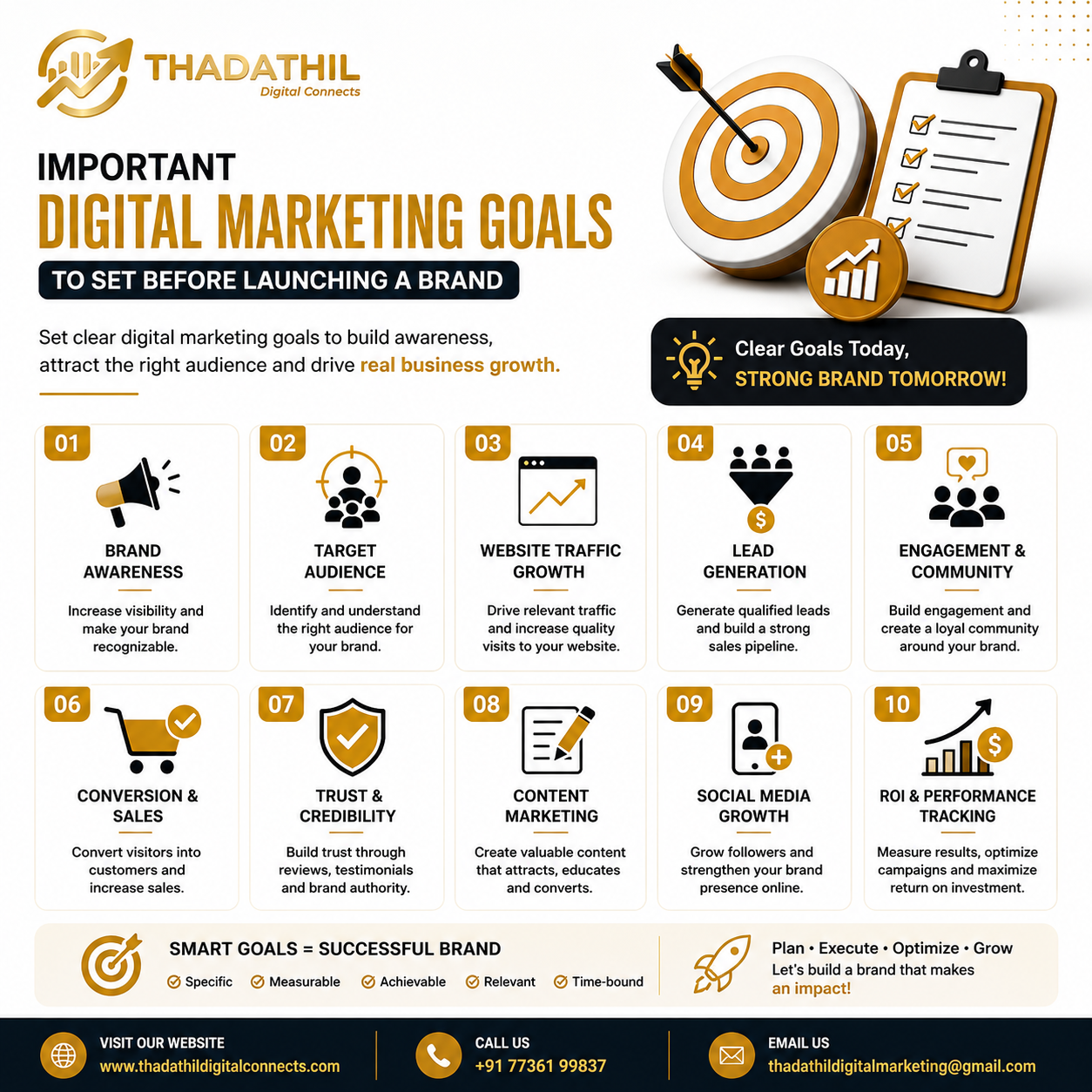
Launching a new brand is exciting, but success doesn't happen by chance. Before introducing your products or services to the market, you need a well-defined digital marketing strategy with measurable goals. Without clear objectives, even the best products may struggle to reach the right audience.
Whether you're a startup, small business, or established company introducing a new brand, setting digital marketing goals helps you build awareness, attract potential customers, and achieve sustainable business growth.
In this blog, we'll explore the 10 essential digital marketing goals every business should set before launching a brand.
Why Are Digital Marketing Goals Important?
Digital marketing goals provide direction for your marketing efforts. They help you allocate your budget wisely, measure campaign success, and make data-driven decisions. Instead of focusing on random promotional activities, goal-oriented marketing ensures every campaign contributes to your overall business objectives.
- Increase online visibility
- Reach the right audience
- Generate qualified leads
- Improve customer engagement
- Build long-term trust
- Maximize marketing ROI
1. Build Brand Awareness
The first goal of any new brand should be creating awareness. People cannot buy from your business if they don't know it exists.
- Search Engine Optimization (SEO)
- Social Media Marketing
- Google Ads
- Content Marketing
- PR & Media Coverage
The more people recognize your brand, the easier it becomes to gain trust and attract customers.
2. Identify Your Target Audience
Not everyone is your ideal customer. Understanding your target audience helps you create personalized marketing campaigns that generate better engagement and higher conversions.
- Age
- Location
- Interests
- Income
- Online behavior
- Buying intent
Knowing your audience ensures your marketing budget is spent effectively.
3. Increase Website Traffic
Your website acts as your digital storefront. One of your primary marketing goals should be attracting qualified visitors who are genuinely interested in your products or services.
- SEO
- Google Search Ads
- Blog Marketing
- Email Campaigns
- Social Media Promotions
More relevant traffic creates more opportunities for conversions.
4. Generate Quality Leads
Traffic alone doesn't grow a business. Your marketing strategy should focus on generating qualified leads who are likely to become paying customers.
- Landing Pages
- Lead Magnets
- Google Ads
- Contact Forms
- Free Consultations
- Downloadable Resources
A strong lead pipeline keeps your sales process active and supports long-term growth.
5. Build Engagement and Community
Successful brands don't just sell—they build relationships. Engaging with your audience creates loyal customers.
- Respond to comments
- Run polls and contests
- Share user-generated content
- Post educational videos
- Host live sessions
An active community increases customer loyalty and brand advocacy.
6. Improve Conversion and Sales
The ultimate purpose of digital marketing is to convert visitors into customers.
- Create compelling landing pages
- Use strong CTAs
- Simplify checkout
- Offer promotions
- Optimize for mobile users
Higher conversions mean better returns from your marketing investment.
7. Build Trust and Credibility
Consumers are more likely to choose brands they trust.
- Customer testimonials
- Online reviews
- Certifications
- Case studies
- Quality content
- Transparent communication
Trust reduces hesitation and encourages purchase decisions.
8. Develop a Strong Content Marketing Strategy
Content is the foundation of successful digital marketing.
- Blog articles
- Videos
- Infographics
- Social media posts
- Email newsletters
- Industry guides
Consistent content positions your brand as an authority while improving search visibility.
9. Grow Your Social Media Presence
Social media plays a significant role in modern brand building.
- YouTube
- X (Twitter)
Consistent posting and meaningful interactions build a loyal online community.
10. Measure ROI and Optimize Performance
One of the biggest advantages of digital marketing is its measurability.
- Website traffic
- Conversion rate
- Cost per Lead (CPL)
- Customer Acquisition Cost (CAC)
- Return on Ad Spend (ROAS)
- Return on Investment (ROI)
Regularly analyzing campaign performance allows you to optimize strategies and maximize results.
Set SMART Goals for Better Results
Every marketing goal should follow the SMART framework:
- Specific – Clearly define what you want to achieve.
- Measurable – Track progress using data and KPIs.
- Achievable – Set realistic and attainable targets.
- Relevant – Align goals with your business objectives.
- Time-bound – Establish deadlines to stay focused.
SMART goals help ensure your marketing efforts are strategic, organized, and results-driven.